What’s
the Matter with
By
Francis Bartus
Posted 12/17/05
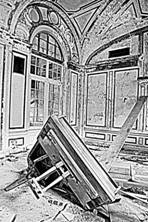 An
aged and glorious grand piano lies prostrate and helpless, collapsed on its
side in a forgotten ballroom. As I touch
my fingers to the ivory keys stained black with the filth of seven decades, it
breathes out a few faint but hopeful notes.
White-paint flakes drift to the floor, dancing down from the vaulted
ceilings, a snowy spectacle of bygone beauty—long since abandoned.
An
aged and glorious grand piano lies prostrate and helpless, collapsed on its
side in a forgotten ballroom. As I touch
my fingers to the ivory keys stained black with the filth of seven decades, it
breathes out a few faint but hopeful notes.
White-paint flakes drift to the floor, dancing down from the vaulted
ceilings, a snowy spectacle of bygone beauty—long since abandoned.
Once I set up my
shot, the SNAP of the camera shutter rings out, cutting through the silence
of the ballroom. Bathed in the diffuse
light that seeps in above the cinder blocks which have long barred dancers, I
reflect. This is the Lee Plaza Hotel, a
beautifully ornamented eighteen-story structure that once housed the
wealthiest, most fashionable tenants in one of
Like so many of
the remaining monuments to
 So many traces of
According to the New
York Times, one third of
|
The
|
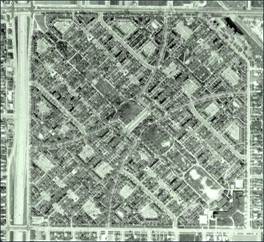
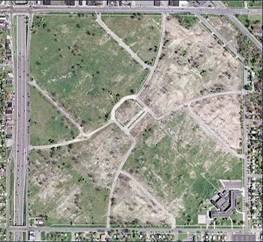
Unsurprisingly,
In the early
nineteenth century, just as the automotive industry began to take off, Henry
Ford famously began to integrate his workforce.
Hiring African-Americans for countless blue-collar and even white-collar
positions, he transformed
Needless to say, racial
disparities in employment had a profoundly negative impact on the economic standing
of African-Americans, which in turn worsened their overall housing situation. Economic circumstances provided only one of
the many obstacles to equitable housing among African-Americans; overt
race-based discrimination within Real Estate agencies and government regulatory
agencies sealed the deal. Much of the
responsibility lies with the Federal Housing Administration and Home Owners
Loan Corporation, a federal agency which subsidized housing developments. The rules governing the organization dictated
that loans could not be made for so-called “risky properties,” which, by the
Federal government’s standards, included both older homes and racially
heterogeneous neighborhoods. Thus, while
whites could obtain loans to build or to purchase a home quite easily, African-Americans
faced a multitude of barriers. Often,
Real Estate companies exacerbated racial divisions, steering African-American
home buyers to certain neighborhoods and white home buyers to others. This perpetuated a segregated, economically
disparate environment in which African-Americans had little upward mobility. More often than not, they were unable to move
into white neighborhoods, so they remained trapped in lower-income
African-American neighborhoods, which bore the brunt of crime and racism. When African-American families did manage
to integrate into white neighborhoods, they were met with hatred and violence: prior
to 1967, over 200 incidents of violence against African-Americans moving into
white neighborhoods were recorded. It
was practically assured that these families would have their homes pelted with
stones and their windows broken—in one case, an angry white neighbor threw a
tree stump through the window of an African-American home.
To this very day,
After World War I, some black
residents of
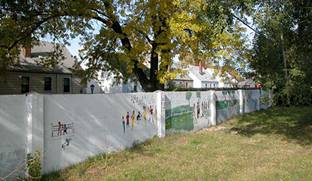 The
persistent practices of Real Estate agents, encouraged by the FHA’s racist
policies, divided the city into concrete white neighborhoods and black
neighborhoods. More often than not,
these racial boundaries doubled as socioeconomic barriers. African-American neighborhoods faced
predatory lending, low property values, and high crime rates. All of these factors contributed to the
perpetuation of poverty and economic inequality in the city. This outright segregation left many
African-Americans feeling angry and disillusioned as racial tensions approached
closer and closer to the breaking point.
The
persistent practices of Real Estate agents, encouraged by the FHA’s racist
policies, divided the city into concrete white neighborhoods and black
neighborhoods. More often than not,
these racial boundaries doubled as socioeconomic barriers. African-American neighborhoods faced
predatory lending, low property values, and high crime rates. All of these factors contributed to the
perpetuation of poverty and economic inequality in the city. This outright segregation left many
African-Americans feeling angry and disillusioned as racial tensions approached
closer and closer to the breaking point.
And when the
bulldozers came, flattening African-American neighborhoods, businesses, and
cultural centers, they laid down two major freeways: Interstate 75 and M-10, or
“The Lodge.” These freeways cut through
African-American neighborhoods, displacing countless people and destroying one
of their most important cultural centers:
[The] neighborhood that black
migrants and white ethnics had struggled over during the 1940s was buried
beneath several layers of concrete. As the oldest established black enclave in
But the freeways did more than feed
the flames of racial tension; they also opened the door for whites who worked
in the city—and the businesses they worked for—to leave. White flight was born.
 As
the racial pressure continued to mount, it was only a matter of time before the
explosive mixture erupted. It began with
a seemingly routine raid on an after-hours bar at 12th and Clairmont
in an African-American neighborhood.
As
the racial pressure continued to mount, it was only a matter of time before the
explosive mixture erupted. It began with
a seemingly routine raid on an after-hours bar at 12th and Clairmont
in an African-American neighborhood.
After five days,
the flames were quelled. Amidst the
ashes lay 43 dead and 1,189 injured.
Over 7,000 people were arrested and 1,400 buildings burned. The economic toll of the infamous 1967 race
riot came to $22 million. Coleman Young,
a later major of the city, reflected on the riots:
The heaviest casualty, however, was
the city.
The scales had finally tipped. Decades worth of
pent-up anger overflowed into the streets, and when white people saw the sad
result of the persistent marginalization of African-Americans, they continued
to flee in unprecedented numbers.
As
of the 2000 census, the Metropolitan Detroit area remained the most segregated
in the country. The economic and social
costs of this segregation have taken a staggering toll on the city—rendering it
one of the poorest and most dangerous cities in the nation. Yet, paradoxically, many residents of the
metro area fail to recognize the correlation.
Tamar Jacoby, author of Someone Else’s House: America’s Unfinished
Struggle for Integration—a book criticizing Detroit’s failed attempt at
integration writes that “we used to think that kind of separatism was
deplorable; now, we think it's acceptable, and perhaps preferable.” Prominent commentators echo Jacoby’s
conclusion, many of whom contributed to the Detroit New’s 2002 series tackling
the cost of segregation in the Metro Detroit area. Reporters interviewed both black and white
families in the Metro area to find that most were unconcerned with the problem
of segregation. Debbie Jodoin, a
resident of Novi, which is 87.3% white and 1.9% black, said “we're Catholic,
the people across the street are Jewish, there are people of Oriental descent
and our kids play with the African American kids down the street.” Suburban whites and suburban blacks both
seemed relatively unconcerned about the persistence of residential segregation.
Yet their predominantly
apathetic attitudes substantiate the fact that the problem of segregation hits
poor black Detroiters the hardest. In
another article, the Detroit News interviewed black Detroiter Shannton
Gaston, a day care operator spending her retirement money to send her children
to private schools. “It's different in the suburbs,” she claimed, “They have
the best of both worlds—their children have good schools.” According to the News, “Bad schools
are among the steep costs of segregation to Metro Detroit blacks,
three-quarters of whom live in Detroit. They run a greater risk for heart
attacks, low birth-weight babies, homicides, stunted home values and dead-end
jobs.” It seems that only those who
suffer the consequences of segregation seem to care about it. Too many affluent youth in the suburbs—white
and black alike—adopt the attitude that blacks and whites self-segregate on a
purely voluntary basis. Though recent
studies reinforce this assumption, they do not nullify the fact that blacks are
suffering from their segregation—and that few would tolerate inadequate public
schooling, rampant crime, and sky-high insurance rates if they could afford to
do otherwise.
Thus, suburban
whites and blacks alike must take it upon themselves to experience the city,
rather than to isolate themselves from its problems. If our young people never cross underneath
that enigmatic sign that reads ‘8 Mile Road,’ forgetting what that sign once
meant to their parents and their neighbors who crossed under it when they left
the city, then they will overlook the poor who remain trapped on the wrong side. Mayor Kwame Kilpatrick has already made the
first move by sparking public discussion of Detroit’s segregation; now affluent
suburbanites and poor city-dwellers must each in turn acknowledge the problem,
and work to change it. For too many
concrete walls still stand between suburban whites and urban blacks, and too many
forgotten pianos silently bear witness to a sordid history of segregation.

(click for Lee Plaza photo gallery)
Works Cited
Boileau, Lowell.
“8 Mile: The Gates of
Sugrue, Thomas. The
Origins of the Urban Crisis: Race and Inequality in Post-War
Herman, Max, PhD. The
Young, Coleman. Hardstuff : The Autobiography of Mayor Coleman
Young. Viking Adult, 1994.